HIGHLIGHTS FROM OUR LAST SHOW

Arash Kia
Mount Sinai Health System

Greg Caressi
Frost & Sullivan

Jerrold Jackson
Mayo Clinic

Maneesh Goyal
Mayo Clinic

Naiteek Sangani
Microsoft

Rosine Castro
Emory Healthcare

Anthony Chang
Rady Children's Health
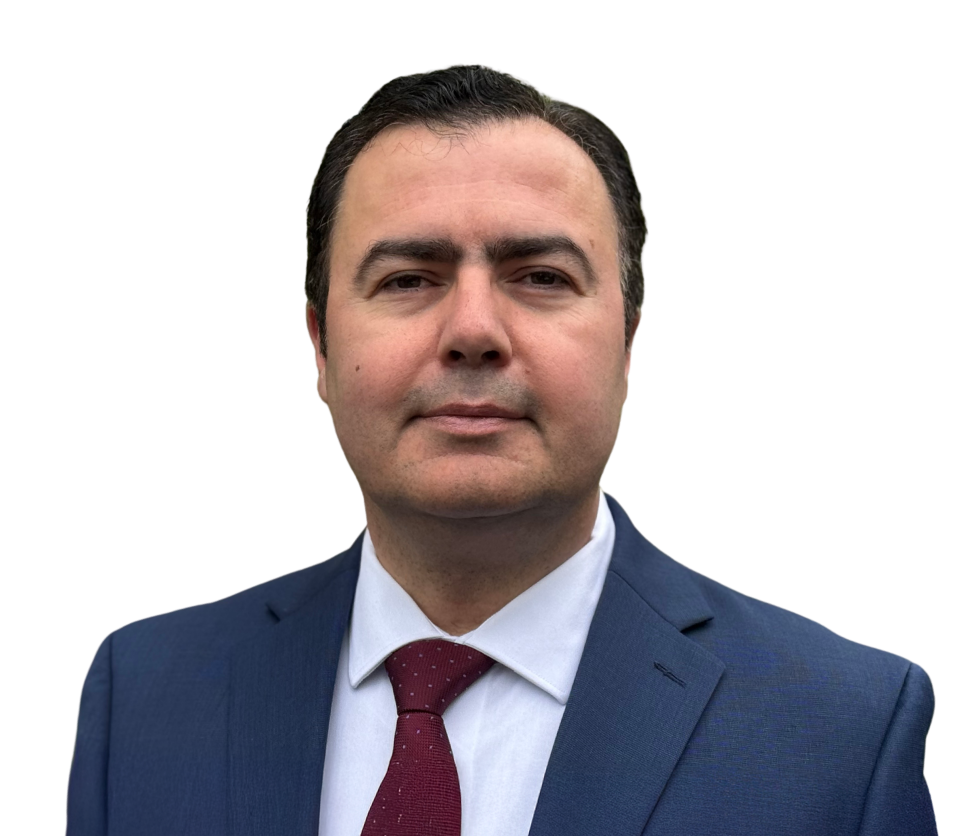
Farzad Khalvati
SickKids
Arash Kia
Mount Sinai Health System
Greg Caressi
Frost & Sullivan
Jerrold Jackson
Mayo Clinic
Maneesh Goyal
Mayo Clinic
Naiteek Sangani
Microsoft
Rosine Castro
Emory Healthcare
Anthony Chang
Rady Children's Health
Farzad Khalvati
SickKids
Arash Kia
Mount Sinai Health System
Greg Caressi
Frost & Sullivan
Jerrold Jackson
Mayo Clinic
Maneesh Goyal
Mayo Clinic
Naiteek Sangani
Microsoft
Rosine Castro
Emory Healthcare
HEALTH DATA
The next steps in health AI will be clinically validated recommendation systems, new approaches to autonomous diagnostics, health digital twins, a focus on open interoperability standards, and sovereign data environments with interconnected clinical platforms.
SHOW MORE
Health AI is alive and well. Patient needs are evolving faster, care pathways have become more complex, and healthcare needs a more modular approach; clinical decision support, automated diagnostics, software-defined care infrastructure, and digital representations of patient health are critical to success in the near future. The first years of health AI were characterised by sensor-generated patient data, integration protocols and the networking of clinical systems across care settings.
How Health AI Is Changing Clinical Environments
Health AI continues to evolve, growing with technological possibilities, and many solutions have matured over the past few years. In marketplaces for clinical technology, the focus is primarily on an ever-increasing simplification in order to reduce administrative burden and time to clinical insight. At the same time, this is compressing the time to deployment across the health sector. Low-code and open-standard applications are in greater demand than ever before because they accelerate development whilst making clinical workflows more adaptable. In addition, there are new requirements not only for operating frameworks governing clinical AI tools, but above all for the way healthcare professionals collaborate with automated systems. Human-in-the-loop validation and context-aware clinical models are among the defining movements in this continuing chapter of health AI.
At the same time, many health organisations are relying on the health digital twin, being the dynamic digital representation of a patient's physiology, care history and treatment trajectory. Clinicians and researchers develop and validate their models in virtual environments before deploying them into live clinical settings. Early adopters are already presenting virtualised clinical decision architectures where legacy hardware dependencies are removed, and model inference is handled at the data infrastructure layer. The interoperability achieved in the early stages of electronic health record adoption is now making it possible to establish secure, sovereign data environments that can be shared responsibly across healthcare providers, research institutions and technology partners. These environments are designed to enable new models of care delivery, population health management, and federated model training.
The Continuing Evolution of Health AI
This new chapter of health AI is a story of new applications and new possibilities across clinical settings, where autonomous systems support triage decisions overnight, care teams collaborate with intelligent tools across the full patient journey, and validated models surface actionable clinical insights in real time. It is also a story of increasing responsibility. Governance, patient safety, and data sovereignty are the foremost concerns for health sector decision-makers. Despite the genuine promise of clinical AI and health data integration, the risks and associated challenges are significant.
Interoperable records, data quality and sovereign compute underpin every credible clinical AI deployment. Health AI Australia 2027 examines the platforms, integration frameworks and data infrastructure that determine whether models can be trained responsibly, trusted clinically, and scaled sustainably across the Australian health system.
OUR SPONSORS

